
Peptide reconstitution guide
How to mix lyophilized research peptides with bacteriostatic water, work out the concentration and store the result.
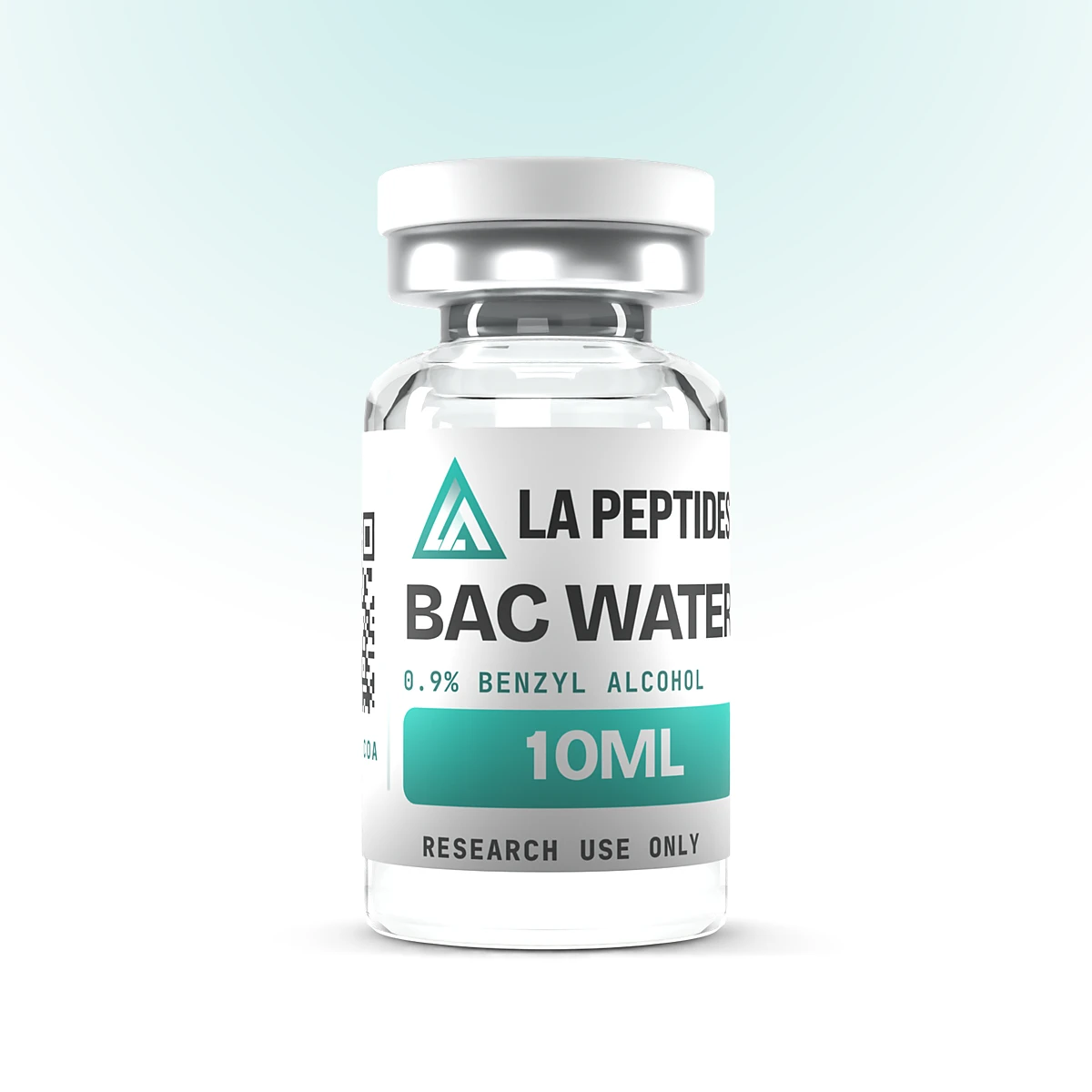
Most research peptides from LA Peptides arrive as lyophilized powder in a sealed vial. Peptide reconstitution is the step where you turn that powder into a solution you can measure. It takes a few minutes, and getting it right makes every later step easier.
What you need for peptide reconstitution
- The sealed peptide vial, brought to room temperature
- Bacteriostatic water (or acetic acid for the few peptides that need it)
- Sterile syringes and alcohol swabs
- A marker or labels, and space in the fridge
Step-by-step peptide reconstitution
Warm and wipe
Let the vial reach room temperature so moisture doesn’t condense inside. Wipe both stoppers with an alcohol swab.
Draw the water
Draw the volume you’ve chosen into a sterile syringe and push out any air bubbles.
Add it slowly
Run the water down the inside wall of the vial, not straight onto the powder.
Swirl and label
Swirl gently until it’s clear. Write the concentration and date on the vial, then refrigerate.
Working out the concentration
The concentration is simply the amount of peptide divided by the volume of water. A 10mg BPC-157 vial mixed with 2ml of water gives 5mg per ml. The same vial with 1ml gives 10mg per ml.
Larger amounts need more water. A 1000mg NAD+ vial mixed with 10ml gives 100mg per ml, and a 100mg GHK-Cu vial with 5ml gives 20mg per ml. Pick a volume that makes your measurements easy, and every product page lists a few example volumes for that strength.
Storing reconstituted peptides
Once mixed, keep the vial upright in the fridge and use it within a few weeks. Sealed powder is far more forgiving: a fridge works for weeks and a freezer for months. If vials move between benches or buildings, a peptide case keeps the glass safe.
Common peptide reconstitution mistakes
The usual ones are shaking the vial, spraying water directly onto the powder, forgetting to label the concentration and reusing syringes. Each one is easy to avoid. Labeling matters most, because an unlabeled vial a week later is a guess.
Don’t want to mix anything? Our nasal sprays come premixed, and our capsules are pre-measured.
Reconstitution FAQ
What liquid should I use for peptide reconstitution?
Bacteriostatic water for almost everything. A few peptides, mainly IGF-1 LR3, dissolve better with a little acetic acid.
Should I shake the vial?
No. Swirl or roll it gently. Shaking can damage peptide chains and cause foaming.
How long does a mixed vial last?
Keep it in the fridge and use it within a few weeks. Dry powder keeps much longer than solution.
Can I freeze a reconstituted peptide?
It’s better not to. Freeze-thaw cycles can break peptides down. Freeze the sealed powder instead.
For published work on how storage and solution conditions affect peptides, see this PubMed search on peptide stability.
Get BAC water with your order
One 10ml vial usually covers three to five peptide vials.
This guide covers laboratory handling only. LA Peptides products are for research use and aren’t for human or veterinary use.