

Description
Methylene blue from LA Peptides is a high-purity aqueous solution in a dropper bottle. It’s used as a laboratory stain and in redox research. Each batch has a certificate of analysis you can open by scanning the QR code on the label.
What is methylene blue?
It’s a dye that Heinrich Caro first made in 1876 at BASF. It’s been used in microscopy ever since, to stain cell nuclei and bacteria, and it’s still a standard reagent in biology labs.
It’s also redox active. It switches between a blue oxidized form and a colorless reduced form, and it can pass electrons along inside mitochondria. That’s why it shows up in mitochondrial and aging research next to compounds like NAD+.
Why researchers keep methylene blue on hand
As a stain it’s quick and cheap, and it works on a wide range of cells. As a redox indicator, the color change gives a visual readout of whether a solution is oxidizing or reducing.
In mitochondrial work, the interest is in how it can bypass parts of the electron transport chain. That’s a long way from its origins as a textile dye, which is part of what makes it such an interesting compound.
Methylene blue specifications
- Contents: methylene blue, aqueous solution
- Container: dropper bottle
- Testing: batch certificate of analysis via QR code
- SKU: LAP-MBLUE
- Use: laboratory research only
How to use methylene blue
Shake gently before use and measure with a clean dropper or pipette. It stains skin, clothes and benches, so wear gloves and work over a protected surface.
Use it diluted as your protocol calls for. A little goes a very long way.
For background reading, here’s a PubMed search on methylene blue and mitochondria.
Storage
Keep the bottle tightly closed at room temperature, away from light, which can degrade it over time.
Goes well with
- NAD+ 1000mg, coenzyme (nicotinamide adenine dinucleotide)
- MOTS-C 10mg, 16-amino-acid mitochondrial peptide
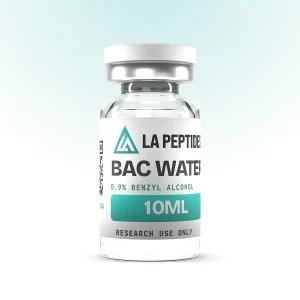
- BAC Water 10ml, 10ml vial
See all peptide lab supplies, or browse the full range of research peptides.
Staining basics
For simple staining, a dilute solution applied for a minute or two, then rinsed, is usually enough to show nuclei and bacteria under a light microscope. Stronger solutions and longer times give darker staining, so start light and adjust.
Because the color depends on the redox state, a solution that turns colorless has been reduced. That color shift is the basis of several classic lab demonstrations and assays.
Cleaning up spills
It stains almost everything it touches. Wipe spills straight away with paper towels, then clean the surface with alcohol or a dilute bleach solution. Lab coats and old clothes are a good idea, and it’s worth keeping it well away from carpets.
Dispose of used solutions according to your lab’s rules for dyes.
Methylene blue FAQ
What is it used for in the lab?
Mainly as a stain for microscopy and as a redox indicator. It also appears in mitochondrial research.
Is it tested?
Yes. Scan the QR code for the batch certificate of analysis.
Will it stain?
Yes, very easily. Wear gloves.
How should I dilute it?
Follow your staining protocol. Start with a dilute solution and increase strength only if the staining is too faint.
Does light affect it?
Yes, over time. Store the bottle closed and away from direct light.
Is it for human use?
No. It’s sold for laboratory research only.
Get methylene blue from LA Peptides
Add it to your cart. Checkout takes a couple of minutes, and your order history stays in your account. Need more than one compound? Our peptide bundles save about 15% over buying each item on its own.
For laboratory research use only. Not for human or veterinary use. Not evaluated by the FDA.
Reviews
There are no reviews yet.