
Description
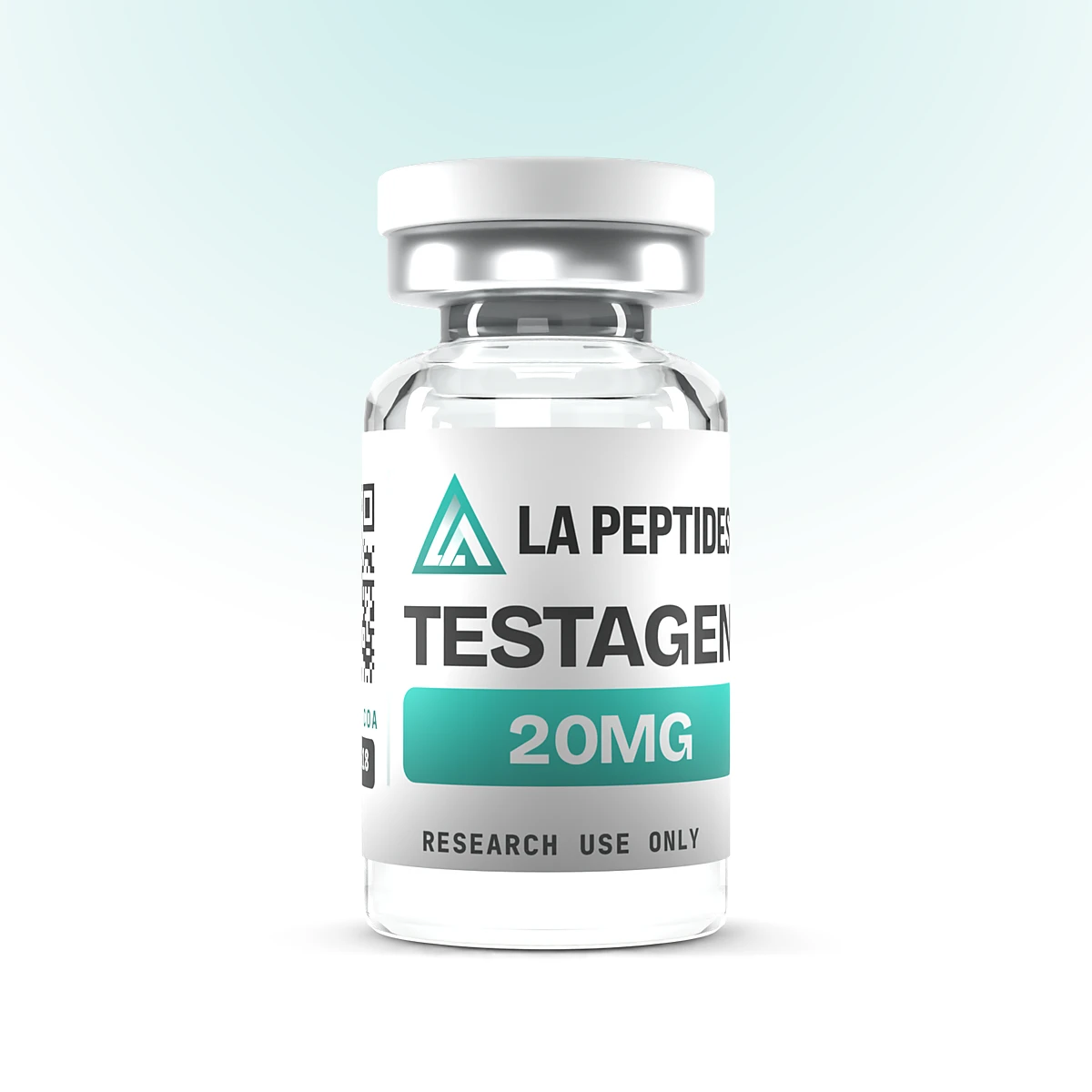
This is Testagen, a synthetic tetrapeptide bioregulator in a 20mg vial. It’s freeze-dried and sealed, with a batch certificate of analysis you can open from the QR code on the label.
What is Testagen?
It’s a short peptide of just four amino acids: Lys-Glu-Asp-Gly. It belongs to a group that researchers call bioregulators, or Khavinson peptides, after the scientist who developed most of them.
Each bioregulator is tied to one organ or tissue, and Testagen is associated with the testes and male reproductive tissue. The idea is that these very short peptides can enter cells and interact with DNA and gene regulation in testicular tissue, which sets them apart from peptides that act on receptors at the cell surface.
Short sequences like Lys-Glu-Asp-Gly are easy to make with high consistency from batch to batch, which helps when you’re comparing results over time.
Testagen specifications
- Type: bioregulator peptide
- Amount: 20mg per vial
- Form: lyophilized (freeze-dried) powder
- SKU: LAP-TESTA-20
- Testing: batch certificate of analysis via QR code
- Use: laboratory research only, not for human or veterinary use
Testagen research background
Vladimir Khavinson and his colleagues at the St. Petersburg Institute of Bioregulation and Gerontology developed the bioregulators from the 1970s onward, first as tissue extracts and later as synthetic short peptides like this one.
Their studies used cell cultures and aging animals, and looked at gene expression and tissue function in testicular tissue. Most of the published work comes from that group, so outside replication is still limited.
Most of the papers are indexed on PubMed. Try a PubMed search to start.
Checking the batch COA
Every batch gets its own certificate of analysis, and the QR code on the Testagen label takes you straight to it. Look for the lot number, the test date and the purity figure. If the lot on the paperwork doesn’t match the lot on the vial, set the vial aside until it’s sorted out.
File the COA with the rest of your study notes. If results ever shift between batches, it’s the first thing you’ll want to check.
Working out the concentration
How much liquid you add decides the concentration. For a Testagen vial holding 20mg:
- 1ml of bacteriostatic water gives 20mg/ml
- 2ml of bacteriostatic water gives 10mg/ml
- 3ml of bacteriostatic water gives about 6.67mg/ml
Choose whichever volume makes the math simplest for your protocol, and label the vial with the concentration and the mixing date.
Storage and reconstitution
Keep the vial sealed in the fridge, or in a freezer for long storage. Let it reach room temperature before opening so condensation doesn’t get in.
To reconstitute, add bacteriostatic water slowly down the side of the vial and swirl until it’s clear. Store the mixed solution in the fridge and use it within a few weeks.
Other bioregulator peptides
We stock ten bioregulators. A few that often go into the same study:
- Thymalin 10mg, thymic peptide complex
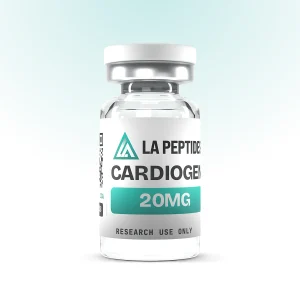
- Cardiogen 20mg, bioregulator associated with the heart and blood vessels
- Vilon 20mg, bioregulator associated with the thymus and immune system
- Vesugen 20mg, bioregulator associated with blood vessel walls
See the full list in our bioregulator peptides range.
Testagen FAQ
How much is in each vial?
20mg of lyophilized peptide.
Is it the same as a tissue extract?
No. It’s a synthetic peptide with a defined sequence, not an extract.
Is every batch tested?
Yes. Scan the QR code on the label to see the certificate of analysis for your batch.
Can it be used on people or animals?
No. It’s sold for laboratory research only.
Buy Testagen online
Pick your quantity, add it to the cart and you’re done in a couple of minutes. Need more than one compound? Our peptide bundles save about 15% over buying each item on its own.
For laboratory research use only. Not for human or veterinary use. Not evaluated by the FDA.
Reviews
There are no reviews yet.